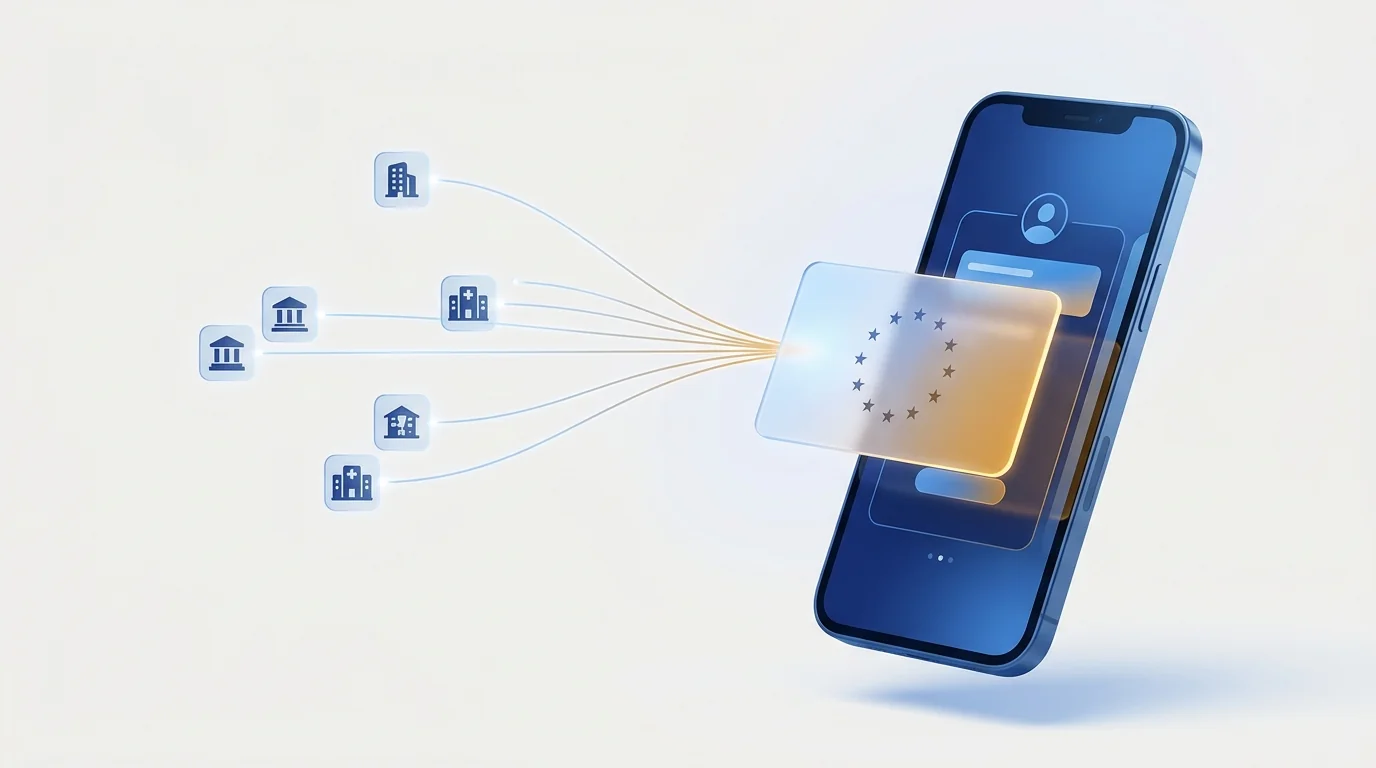
eIDAS2 is EU Regulation 2024/1183, in force since 20 May 2024, which updates the European framework for digital identity and trust (the original 2014 eIDAS). Its centrepiece is the European Digital Identity Wallet (EUDI Wallet): an app that every Member State must offer its citizens and that will let people identify themselves, share verified credentials and sign electronically across the EU.
For companies this is not a cosmetic change: the phased rollout between 2026 and 2027 will require certain sectors to accept the wallet as a means of identification, and it redefines how attributes (powers of attorney, qualifications, representation) are evidenced in contracting, onboarding and signing processes. This article, updated in June 2026, summarises what changes, on what timeline, and how to prepare without redoing your processes.
What changes with eIDAS2: the three new things that affect your company
The 2014 eIDAS already gave electronic signatures legal validity across the EU — that does not change: a qualified signature remains the legal equivalent of a handwritten one. What is new is the ecosystem being built around it:
- The EUDI Wallet. Every Member State must offer its citizens at least one digital identity wallet by the end of 2026. With it, a person can identify themselves to your company at a high assurance level and sign with a qualified signature that is free for non-professional use — without having to go and obtain a certificate.
- Electronic attestations of attributes. A new trust service to electronically evidence verified facts: a qualification, a driving licence, powers of representation, official roles. In B2B processes this means being able to verify who is signing and in what capacity, without photocopies of company deeds.
- New qualified trust services: qualified electronic archiving (long-term preservation with a presumption of integrity) and electronic ledgers. For the digital case file, qualified archiving is the piece that closes the signature → evidence → preservation cycle.
Timeline: which date affects you
The rollout is phased and it helps to place yourself within it:
- May 2024 — entry into force of Regulation (EU) 2024/1183.
- End of 2024 — adoption of the first technical implementing acts (core wallet functions, protocols, certification).
- End of 2026 — Member States must have their wallet available to citizens.
- From 2027 — a duty to accept the wallet for sectors that already require strong customer authentication (banking and financial services, telecoms, transport, energy, healthcare…) and for very large online platforms.
In practical terms: if you operate in a regulated sector, in 2027 a customer will be able to show up with their European wallet and you will have to accept it as identification. Arriving with your identity and signature flows already in order is the difference between a tweak and an emergency project.
How to prepare without redoing your processes
Preparation is not about "changing signature provider": it is about making sure identity, signature, evidence and archiving all live in the same process and not in silos.
- Inventory where signing happens in your company today, at what level (simple, advanced, qualified) and what evidence is attached to each signature.
- Review your identity verification points (customer onboarding, KYC, employee onboarding) — they are the first that the European wallet will touch.
- Decouple the signing method from the process: if your workflow orchestrates signing as a configurable step, adding a new method (the wallet) is a configuration change, not a development project.
- Secure long-term archiving of the full case file: document + evidence + time stamp, retrievable in an audit years later.
Where Dokuflex fits
Dokuflex integrates advanced and qualified electronic signature and biometric signature inside the business process itself — exactly the decoupling that eIDAS2 rewards.
- The signing method is a workflow step: when your sector has to accept the EUDI Wallet, it is added without redoing the process.
- Each signature generates its own evidence file (identity, document, time stamp) archived with audit-ready traceability.
- The signature level adapts to the risk of each operation, as customers like CaixaBank with 4.2M contracts a year do today.
Turn this need into a measurable process
Dokuflex combines BPM Low-Code, document management, digital signature, integrations and AI to help you automate processes with control, traceability and room to evolve.
Frequently asked questions
What is eIDAS2 and when did it enter into force?
It is EU Regulation 2024/1183, in force since 20 May 2024, which updates the European framework for identity and trust services. Its rollout is phased: identity wallets available by the end of 2026 and a duty to accept them in regulated sectors from 2027.
What is the European Digital Identity Wallet (EUDI Wallet)?
An application that every Member State must offer its citizens to identify themselves at a high assurance level, share verified credentials (attributes) and sign with a qualified signature that is free for non-professional use and valid across the EU.
Will my company be required to accept the European wallet?
If you operate in a sector that requires strong customer authentication (banking, telecoms, transport, energy, healthcare) or you are a very large online platform, yes: the duty to accept it arrives from 2027. For everyone else it will be a competitive option.
Does eIDAS2 force changing every signing process?
No. The legal validity of advanced and qualified electronic signatures does not change. What you should review is whether your flows properly support identity, evidence and traceability, and whether you can add the wallet as a signing method without redoing the process.
Should the signature be kept separate from the workflow?
No. Integrating it into the workflow is the most robust way to preserve context and evidence for the full process, and it makes adopting new methods such as the EUDI Wallet a configuration change rather than a project.
Related articles
View all
How to implement BPM Low-Code with AI in your company without complicating operations
Practical guide to launching a BPM Low-Code with AI project with focus, realistic scope and measurable results from phase one.
7 advantages of BPM Low-Code with AI for companies that want to automate better
Summary of the most tangible benefits of BPM Low-Code with AI when the company wants to automate faster, with more control and adaptability.
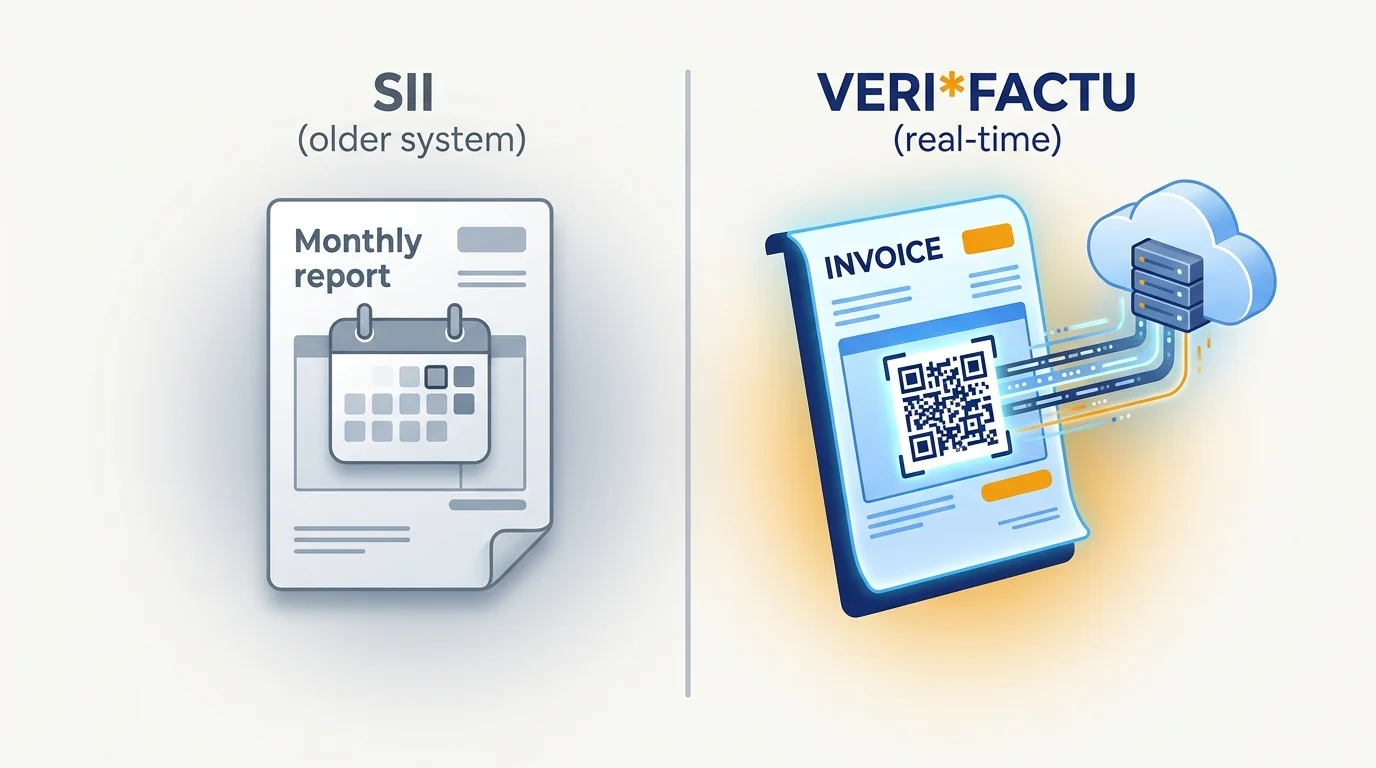
VERI*FACTU vs SII: key differences
Clear comparison between VERI*FACTU and SII to understand scope, obligations and what each company needs to comply with no overlaps.