
Document management does not fail for lack of files but for lack of context. When documents live isolated in folders, emails or standalone apps, search time grows and traceability drops. Improving it requires bringing document and process together.
In this SEO-optimised version we have reorganised the information so you can quickly identify the operational impact of Document Management, the decisions you need to make, and how a platform like Dokuflex can help you move from theory to execution.
Key points to review from the start
The first step is organising document types, owners, permissions and search criteria.
- Define a classification structure useful for the business, not just for archiving.
- Ensure coherent permissions and traceability of access and changes.
- Link every case file to its process, date and owner.
How to roll it out without friction
Next, automate capture, validation, versioning and retrieval of information.
- Remove duplicate repositories and centralise document access.
- Integrate OCR, data extraction or assisted classification where they add value.
- Activate retention, review and document expiry alerts.
Where Dokuflex fits
Dokuflex improves document management because the document is never detached from the workflow.
- Faster search and less reliance on individual know-how.
- More context to make decisions and respond to audits.
- Fewer errors from misaligned versions or incomplete case files.
Turn this need into a measurable process
Dokuflex combines BPM Low-Code, document management, digital signature, integrations and AI to help you automate processes with control, traceability and room to evolve.
Frequently asked questions
Is it enough to store everything in the cloud
No. The cloud solves storage, but document management requires classification, traceability, permissions and a link to the process.
Is AI essential to improve document management
Not always. The essential step is to order structure and process. AI adds value when it helps classify, extract or locate information faster.
Related articles
View all
How to implement BPM Low-Code with AI in your company without complicating operations
Practical guide to launching a BPM Low-Code with AI project with focus, realistic scope and measurable results from phase one.

7 advantages of BPM Low-Code with AI for companies that want to automate better
Summary of the most tangible benefits of BPM Low-Code with AI when the company wants to automate faster, with more control and adaptability.
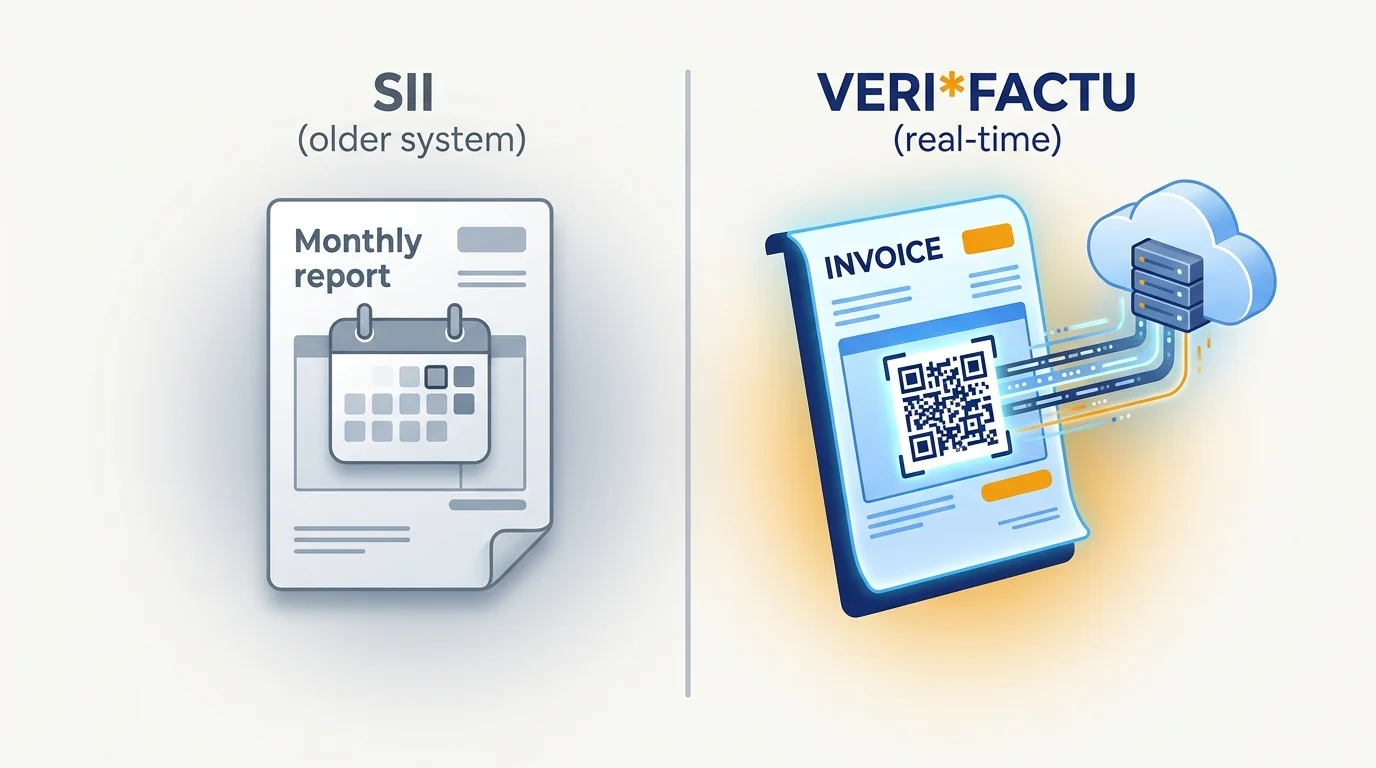
VERI*FACTU vs SII: key differences
Clear comparison between VERI*FACTU and SII to understand scope, obligations and what each company needs to comply with no overlaps.