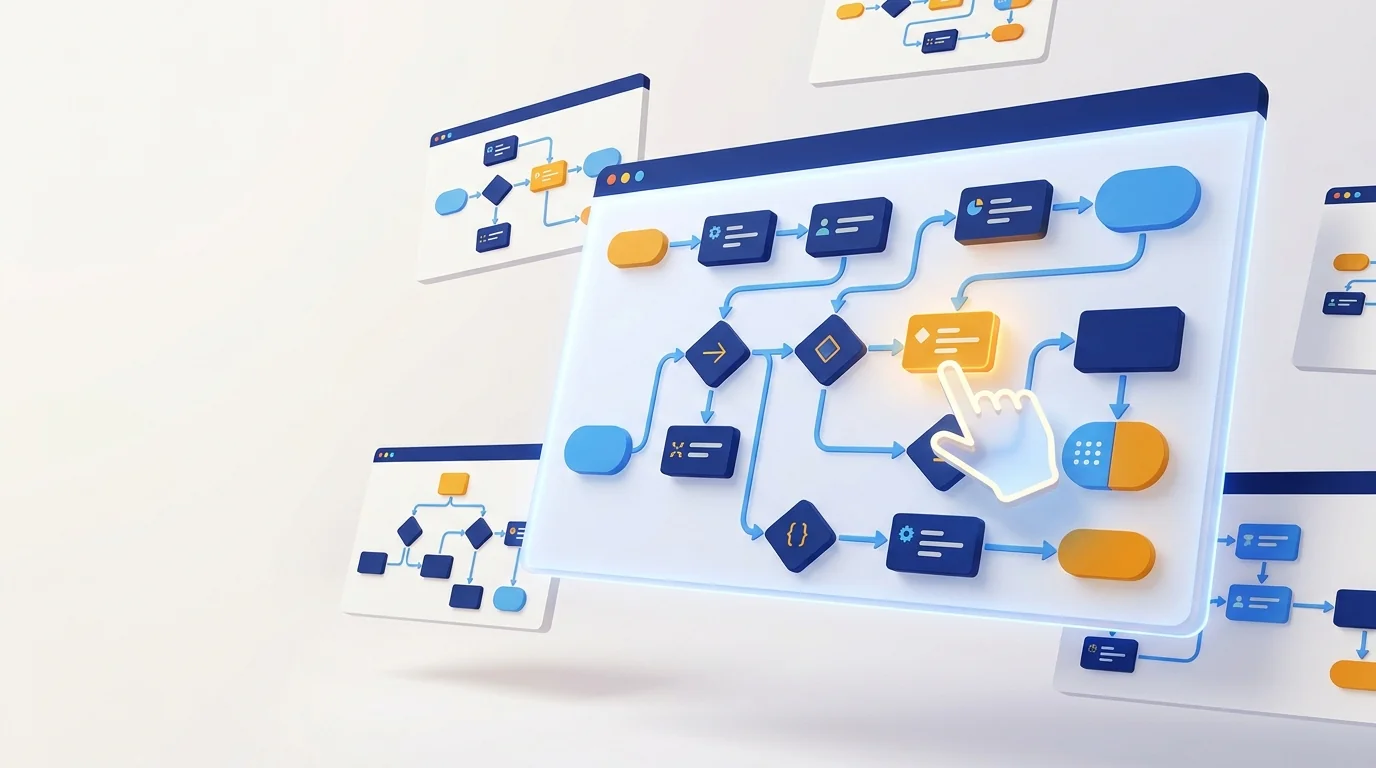
BPM Low-Code platforms are gaining traction because they resolve a very common tension in companies: automating faster without losing control. Compared with long development projects or isolated tools, this approach combines speed, visibility and adaptability.
In this SEO-optimized version we have reorganized the information so you can quickly identify the impact of BPM on operations, the decisions you need to make, and how a platform like Dokuflex can help you move from theory to execution.
Key points to review from the start
The revolution is not just about creating forms faster, but about organizing processes end to end.
- Visual workflow modeling with clear rules and exceptions.
- The ability to iterate without rebuilding the system on every operational change.
- More direct participation from the business in process evolution.
How to bring it into operations without friction
The second major lever is integration with data, documents, digital signature, ERP and corporate services.
- Connect systems to avoid duplications and manual tasks.
- Enable metrics and tracking of times, states and workloads.
- Extend automation in phases with less risk of blocking.
Where Dokuflex fits in
Dokuflex fits well in this shift because it combines BPM, Low-Code, document management and AI in a single platform.
- Faster deployment of new use cases.
- Better consistency across teams, rules and evidence.
- Ability to scale automation without creating new silos.
Turn this need into a measurable process
Dokuflex combines BPM Low-Code, document management, digital signature, integrations and AI to help you automate processes with control, traceability and the ability to evolve.
Frequently asked questions
Does Low-Code mean no governance
No. In fact, when combined with BPM, the goal is to accelerate configuration without losing traceability or flow control.
What kind of companies does it fit best
It fits especially well in organizations with cross-functional processes, integration needs and frequent operational changes.
Related articles
View all
How to implement BPM Low-Code with AI in your company without complicating operations
Practical guide to launching a BPM Low-Code with AI project with focus, realistic scope and measurable results from phase one.
7 advantages of BPM Low-Code with AI for companies that want to automate better
Summary of the most tangible benefits of BPM Low-Code with AI when the company aims to automate with more speed, control and adaptability.
How Robotic Process Automation (RPA) complements BPM solutions
Why BPM and RPA do not compete with each other and how they complement each other when the company seeks end-to-end process automation.