Update, 20 Oct 2026: on 5 October 2026 the Spanish Ministry of Finance (Hacienda) announced, in an information note, the postponement of VeriFactu to October 2028, to align it with B2B e-invoicing (Order HAC/1028/2026). Until the amendment is published in the BOE (Spain's Official State Gazette), the legal dates remain 1 January 2027 (Corporate Tax) and 1 July 2027 (self-employed and the rest of obligated taxpayers). Sources: Hacienda information note (PDF, in Spanish) · elEconomista · The Objective. More detail in the question on the postponement to 2028.
Legal dates 1 Jan 2027 (Corporate Tax) and 1 Jul 2027 · Postponement to Oct 2028 announced, pending BOE publication
VeriFactu for SAP: adapter without changing your ERP
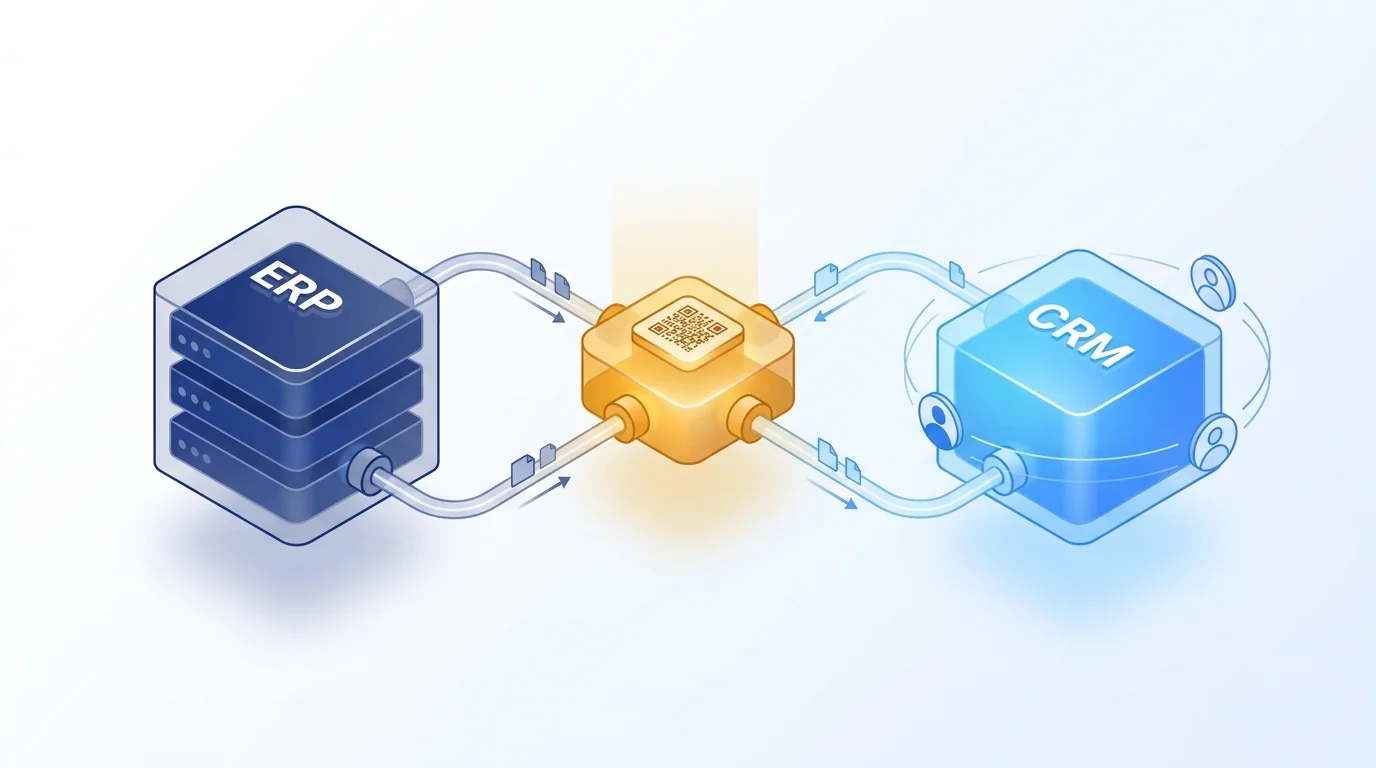
If your Spanish entity invoices with SAP ECC, S/4HANA or Business One, Spain's RD 1007/2023 requires every invoice to come out of a system that generates the invoice record with a chained hash and the tax QR. Dokuflex is the VeriFactu adapter for SAP: it reads the invoices your ERP already issues, adds the chained SHA-256 hash, the XAdES signature and the QR, and submits them to the AEAT (Spain's tax agency). No SAP project, no changes to your custom developments.
Last reviewed: 20 October 2026·Reviewed by the Dokuflex Compliance team
Dokuflex Compliance team — AEAT-approved for certified digitisation (Doku4Invoices, Resolution of 24 October 2007), processing invoices for clients across banking, healthcare and retail. Contact: compliance@dokuflex.com.
No credit cardMeets SIF requirements (RD 1007/2023)SAP connection in 48hFrom €19/month · 10-year archive included
RD 1007
/2023 + Order HAC/1177/2024
48h
to production
10 years
archive included
What the regulation requires
What VeriFactu requires from a company invoicing with SAP
Spain's RD 1007/2023 and Order HAC/1177/2024 regulate the billing information system (SIF) you issue invoices with, not the ERP as such. Whether SAP is ECC, S/4HANA or Business One makes no difference: every invoice and every receipt it produces must generate an invoice record with a chained SHA-256 hash, carry the printed tax QR and, in VeriFactu mode, be submitted to the AEAT at the moment of issue (in non-VeriFactu mode, the record is signed with XAdES and kept). In addition, the taxpayer must keep the records and be able to hand them over on request.
For a company running SAP this comes down to three decisions: who generates the record (SAP itself through a Document and Reporting Compliance project, or an external adapter that reads the issued invoices), which entities are obligated (those under the SII are exempt; the rest of the group's entities, subsidiaries and SMEs are not) and which issuing points exist besides the central ERP: POS in stores, sales-rep apps, recurring billing. All of them generate invoice records.
Penalties: Spain's Law 11/2021 (art. 201 bis LGT, the General Tax Act) provides fines of up to €50,000 per fiscal year for using non-certified billing software. General guidance based on official sources: for your specific case, consult your tax advisor. For the overview of the adapter across all ERPs, see the page on the VeriFactu adapter for SAP, Sage, A3 and Holded.
Two routes to compliance
SAP Document and Reporting Compliance or an external adapter: when each one makes sense
SAP addresses VeriFactu through Document and Reporting Compliance (DRC), a project with its own licence and release calendar. The Dokuflex adapter does not compete with SAP: it is the fast route when the DRC project does not fit your timeline, budget or scope.
Criterion
SAP Document and Reporting Compliance
Dokuflex VeriFactu adapter
Where the record is generated
Inside SAP, with the DRC module configured for Spain
Outside SAP: Dokuflex reads the issued invoice and generates the chained hash, XAdES and QR
Scope
SAP ERP 6.0 and S/4HANA 2020 to 2023 in the cloud edition (KBA 3609812)
SAP ECC (BAPIs), S/4HANA (OData/REST) and any other issuing system via CSV, XML or API
Time to go live
Depends on SAP's release calendar and the implementation project
ERP connection in 24-48 hours; invoices submitted to the AEAT the same day
Subsidiaries on other ERPs
Only covers what is invoiced from SAP
One adapter for SAP, Sage, A3, Holded, Dynamics, POS and custom systems
VeriFactu / non-VeriFactu mode
Depends on the project configuration
Switch between modes from the console, with no migration or changes in SAP
Legal archive
Depends on SAP's archive or a complementary solution
10 years with qualified time-stamping, included
Approval workflow before issuing
Out of DRC's scope
Optional: the invoice is issued once a BPMN process with approval and signature completes
SAP and Document and Reporting Compliance are trademarks of SAP SE. DRC scope per SAP note KBA 3609812 as cited in our comparison of VeriFactu software for 2027; check the current version with your SAP partner.
How it works
How the VeriFactu adapter works with SAP in 3 steps
Your team keeps invoicing in SAP exactly as before. Dokuflex does the rest.
1
Sign up and provide the certificate
Create your account in 30 seconds. Register the Spanish tax ID (CIF) of each obligated entity and its electronic certificate.
2
Connect SAP
Native SAP ECC connector (BAPIs) or OData/REST integration with S/4HANA; other editions via CSV, XML or API export. Dokuflex reads the issued invoices without modifying your SAP.
3
Comply automatically
Every invoice receives the chained SHA-256 hash, the XAdES signature and the tax QR, is submitted to the AEAT with automatic retries and is kept for 10 years with qualified time-stamping.
When the VeriFactu adapter makes sense in an SAP environment
Three situations that keep coming up in groups and mid-sized companies running SAP, and what Dokuflex solves in each one.
Parent under the SII, obligated subsidiaries
The main entity is under the SII and exempt, but two or three small subsidiaries in the group are not and must comply with VeriFactu. Setting up DRC for them does not pay off: Dokuflex reads their SAP invoices and applies the record, QR and AEAT submission only where needed.
SAP at headquarters, a different ERP per country or business
SAP at the parent company, Sage or A3 in a subsidiary, a POS in the stores. A single VeriFactu adapter covers every issuing point with the same chained record and the same legal archive, instead of three different solutions to maintain.
SAP's roadmap does not arrive in time
The S/4HANA migration is under way or the DRC project does not fit the calendar before the mandatory date. The adapter connects to your current SAP in 48 hours and remains valid when you change version: Dokuflex reads the issued invoices, not the ERP version.
VeriFactu calendar for companies running SAP (Royal Decree-Law 15/2025)
RD 254/2025 first moved the dates set by RD 1007/2023 to 2026, and Royal Decree-Law 15/2025 of 2 December postponed them to 2027. These are the dates in force in the BOE, plus the October 2026 announcement that does not yet amend them:
29 JUL
29 July 2025
Software vendors may only commercialise Billing Information Systems (SIF) certified under the VeriFactu rules.
1 JAN
1 January 2027
Mandatory for entities subject to Spanish Corporate Tax: most of the companies that invoice with SAP and are not under the SII.
1 JUL
1 July 2027
Mandatory for self-employed workers and the rest of obligated taxpayers (individuals under direct estimation, professionals and other SMEs not subject to Corporate Tax).
5 OCT
5 October 2026 — postponement to October 2028 announced
Information note from the Spanish Ministry of Finance: planned postponement of VeriFactu to October 2028, to align it with B2B e-invoicing (Order HAC/1028/2026). Not published in the BOE as of 20 Oct 2026: until RD 1007/2023 is amended, the 2027 dates apply.
6 OCT
6 October 2027 and 6 October 2028 — B2B e-invoicing
Order HAC/1028/2026, in force since 6 October 2026, gives companies with a turnover above 8 million euros 12 months, and all others 24 months, to issue and receive invoices in a structured format. It is a separate obligation from VeriFactu, with its own calendar.
What changes in practice
SAP remains your invoicing system. Dokuflex adds the chaining, the hash, the QR and the AEAT submission that VeriFactu requires, with no SAP project and no changes to your developments.
Compliant with RD 1007/2023 and Order HAC/1177/2024, live in 48h, with the 10-year archive included.
Frequently asked questions
VeriFactu and SAP: what we get asked most
Does SAP already comply with VeriFactu on its own?
SAP addresses VeriFactu through Document and Reporting Compliance (DRC), a project with its own licence and release calendar; the cloud edition covers SAP ERP 6.0 and S/4HANA 2020 to 2023 (KBA 3609812). If that project is already on your roadmap and you have the team, it is a valid route. The Dokuflex adapter is the alternative when you want to go live in weeks, not depend on SAP's calendar, cover subsidiaries running other ERPs with a single system, or tie VeriFactu into an approval workflow.
Which SAP editions does the adapter cover?
The integrations published on the platform are the native SAP ECC connector (BAPIs) and the OData/REST integration with S/4HANA Cloud and On-Premise. For other editions, such as Business One, the adapter works as with any other invoicing system: it reads the issued invoices via CSV, XML or API export. The specific versions of your installation are confirmed in the demo before starting.
If my company is under the SII, do I need VeriFactu on SAP?
No. Companies under Spain's SII (Immediate Supply of Information), such as large companies, VAT groups and entities registered in the REDEME, are exempt from VeriFactu. The usual pattern in a group running SAP is that the parent company is under the SII while one or more small subsidiaries are not: those entities are obligated, and they are the typical case for the adapter.
Do we have to modify SAP or its custom developments to comply?
No. Dokuflex works as a VeriFactu adapter on top of SAP: it reads the invoices the ERP already issues via connector, generates the invoice record with a chained SHA-256 hash, XAdES signature and tax QR, and submits it to the AEAT. The current system is not modified and the finance team is not retrained; if a submission fails, it is retried automatically and nothing is duplicated.
When does VeriFactu become mandatory for my company?
The legal dates in force, set by Spain's Royal Decree-Law 15/2025 of 2 December (RD 254/2025 had previously moved them to 2026), are 1 January 2027 for entities subject to Corporate Tax and 1 July 2027 for self-employed workers and the rest of obligated taxpayers. On 5 October 2026 the Spanish Ministry of Finance announced a postponement to October 2028, but as of 20 October 2026 that amendment has not been published in the BOE. Since 29 July 2025 software vendors may only commercialise certified software.
Has VeriFactu been postponed to October 2028?
The Spanish Ministry of Finance announced it on 5 October 2026 in an information note, to align it with B2B e-invoicing (Order HAC/1028/2026). Until the amendment of RD 1007/2023 is published in the BOE, the dates in force remain 1 January 2027 and 1 July 2027. The technical requirements (chained record, hash, QR and AEAT submission) do not change, so whatever you adapt now remains valid: it makes sense to continue the pilot without a last-quarter rush.
We run SAP at headquarters and other ERPs in the subsidiaries. Do we need one adapter per system?
No. Dokuflex connects to each issuing system with its own connector (SAP at headquarters, Sage, A3 or Holded in a subsidiary, a POS in a store) and applies the same chained record, QR and AEAT submission to all of them. It is designed for groups that want to cover subsidiaries running different ERPs without ending up with three VeriFactu solutions, and to go live in weeks without waiting for SAP's release calendar.
How long does it take and how much does VeriFactu for SAP cost with Dokuflex?
The ERP connection is ready in 24-48 hours and invoices are submitted to the AEAT the same day. You can start free, no credit card; plans start at €19 per month depending on invoice volume, with the 10-year legal archive included. For groups with several entities and high volumes, ask for a tailored proposal.
Comply with VeriFactu on SAP this week
Connect your SAP and submit to the AEAT within 48 hours. No credit card, no DRC project, no changes to your developments.