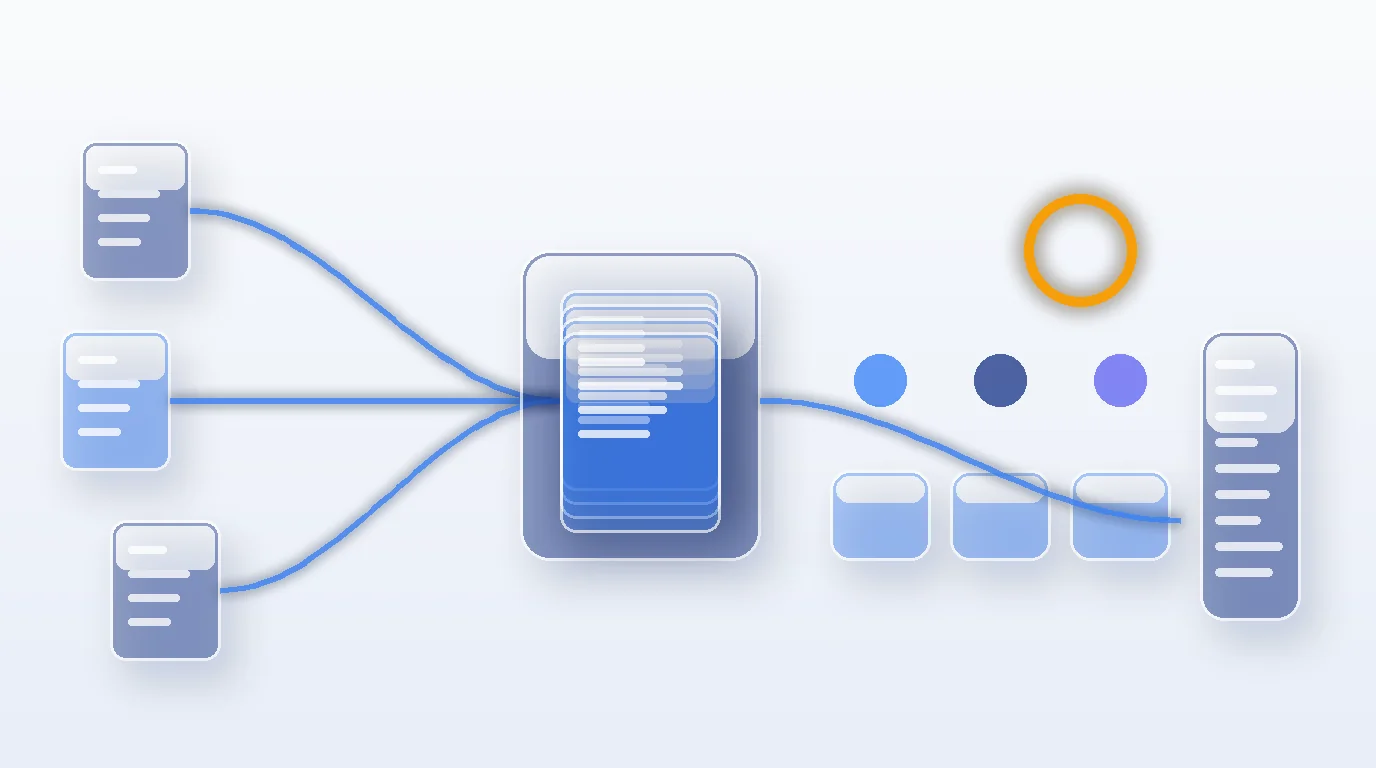
Under Spain’s B2B e-invoicing rules, the recipient has obligations too: it must report acceptance or rejection and full payment of each invoice within 4 calendar days (excluding Saturdays, Sundays and national holidays). This applies from 6 October 2027 to companies with turnover above €8 M and from 6 October 2028 to everyone else (Orden HAC/1028/2026).
The recipient has obligations too (and they are the hardest part)
Mandatory e-invoicing between companies in Spain is not just a format change for the issuer. Orden HAC/1028/2026, which implements Real Decreto 238/2026 and Ley 18/2022 (the “Crea y Crece” business growth law), also requires whoever receives an invoice to report its status: whether it is accepted or rejected, and when it has been paid in full.
The stated goal is to fight late payment. The AEAT (Spanish Tax Agency) will pass this information on to the Observatorio Estatal de la Morosidad Privada (the state observatory on private-sector late payment), which will be able to calculate each company’s real payment terms and publish a list of those that fail to comply. In other words: your average supplier payment period stops being an internal figure.
For issuing, most companies will rely on their ERP or invoicing software, which will be updated. For receiving, the work lies in the internal process: who looks at the invoice, who approves it, how long it takes and where the payment date is recorded. That is accounts payable territory, and an update to your accounting software will not solve it.
Timeline: when the obligation starts for your company
Orden HAC/1028/2026 was published in the BOE on 5 October 2026 and came into force the following day. The deadlines set by Real Decreto 238/2026 run from that date:
| Who | From when | What to keep in mind |
|---|---|---|
| Companies and self-employed professionals with turnover above €8 million | 6 October 2027 | For the first 12 months, invoices must be accompanied by a readable PDF for recipients not yet in scope |
| All other companies and professionals | 6 October 2028 | The clock is already running: 23 months to get the process ready |
| AEAT public solution (SPFE) | At least two months before the first date | The AEAT announced test environments from October 2026 |
Note one detail: the obligation to report statuses applies to all recipients, whatever channel the invoice arrives through. A small business buying from a large supplier that is in scope from 2027 may find structured invoices in its inbox sooner than expected.
And don’t confuse this timeline with VERI*FACTU, which governs the systems you use to issue your own invoices and which the Spanish Treasury has said it wants to align with this one (we explain it in VERI*FACTU postponed to 2028: what changes and what doesn’t).
Invoice statuses: acceptance, rejection and payment within 4 days
The recipient must report to the issuer the acceptance or rejection of the invoice and its full payment within 4 calendar days of that status occurring, excluding Saturdays, Sundays and national holidays. Rejection and full payment must also be reported to the AEAT public solution, whichever channel you use.
| Status | Mandatory? | When the deadline starts | What data you need |
|---|---|---|---|
| Acceptance | Yes | When you decide to accept it | Approval date and who gave it |
| Rejection | Yes, also to the SPFE | When you decide to reject it | Date and reason for rejection |
| Full payment | Yes, also to the SPFE | From the actual payment date | Actual date the supplier was paid, not the due date |
| Partial payment | Voluntary | — | Amount and date of each partial payment |
| Assignment to a third party (factoring) | Voluntary | — | Assignee and date |
Four days is tight for an email-based process. If the invoice lands in a shared mailbox, someone forwards it to the budget holder, they look at it when they can and send it back to finance, the decision to accept or reject is made after one or two weeks at best. From 2027 or 2028, that delay will be on record.
Payment has a catch of its own: what you must report is the date you actually pay, which many companies link to a bank transaction rather than to the invoice. Remember too that Ley 3/2004 on late payment sets a maximum payment term of 60 calendar days between companies; once statuses are reported, any delay will be visible.
Formats and channels: UBL, private platforms and the public solution
Invoices must follow the European semantic model EN 16931. Four syntaxes are accepted: UBL, CII, EDIFACT and Facturae (the Spanish format). The AEAT public solution works with UBL only.
You can receive through a private exchange platform, through the public solution (free of charge) or a combination of both. Unless there is an express agreement with the supplier, the public solution is presumed. Private platforms must be able to convert formats, interconnect with other platforms when the customer requests it, use advanced electronic signatures and assign each invoice a unique code (issuer’s tax ID, number and series, and issue date).
Anyone issuing through a private platform must at the same time send a faithful copy in UBL to the public solution, with the minimum content set out in Annex I of the order. For the recipient this has a practical consequence: the AEAT will hold a copy of every invoice you receive and the statuses you report, so discrepancies between what was received, what was booked and what was paid will be easy to spot.
The takeaway for accounts payable is simple: being able to open an XML file is not enough. Every invoice needs to enter a process where it is read, checked, decided on and paid, with a date recorded at each step.
What needs to change in accounts payable
The real change is not in the format but in the time between the invoice arriving and someone making a decision. These are the five points to review:
A single point of entry
Invoices arriving in each buyer’s inbox, in a shared mailbox or on paper make it impossible to track deadlines. All of them must come in through one mailbox or channel, with the date of receipt recorded.
Checks on arrival, not at month-end
Tax ID, amounts, VAT, related purchase order and duplicates are checked straight away. If the invoice doesn’t match, the rejection with its reason has to go out within the 4 days.
Approval with a deadline and a deputy
Each invoice goes to an approver based on amount, cost centre or project, with a due date, reminder and escalation if there is no response. Without that, the deadline depends on someone’s holidays.
Payment date linked to the invoice
Bank reconciliation must mark the invoice as paid with the actual date, so the data exists without anyone having to look it up in the bank statement.
Traceability of every status
Who accepted, who rejected and why, with date and document. It is your evidence if a supplier or the late-payment observatory disputes a deadline.
Checklist to get invoice receipt ready before 2027
- Calculate your turnover for the last year: if it exceeds €8 million, your date is 6 October 2027.
- Measure how many days currently pass between receiving an invoice and approving it. If the median is above 4 days, that is your project.
- Choose the channel: a private platform, the AEAT public solution or both, and ask your main suppliers which one they will use.
- Centralise invoice intake in a single mailbox or portal and stop accepting invoices sent to personal addresses.
- Define approval rules (amount, cost centre, project) with a deputy for each approver.
- Connect bank reconciliation to the invoice to record the actual payment date.
- Test the process in the AEAT test environment before your date and check that each status goes out with its date.
If you want to go deeper into point 5, our article on how to automate supplier invoice approval explains the rules that work best in a small or mid-sized company.
How Dokuflex solves it: the receiving process, with a date at every step
Dokuflex, a low-code BPM platform with AI, does not replace your ERP or your invoice exchange platform: it automates the receiving process that sits between the two, which is where the 4 days are won or lost. With AI-powered supplier invoice processing:
- Intake from any channel: dedicated mailbox, scanner, mobile, folder or connection to your ERP. The invoice is logged with its date of receipt.
- Reading and validation on arrival: the AI extracts supplier, taxable base, VAT rates, withholdings and due date without templates, and checks the invoice before sending it for approval.
- Rule-based approval: the workflow routes it to the approver by amount, cost centre or project, and records who approved or rejected it, when and why.
- Payment with the actual date: reconciliation with bank transactions marks which invoices are paid, so the payment date is linked to each invoice.
- Posting to your ERP: connectors for SAP, Sage, A3, Holded, Dynamics or Odoo, with no re-keying.
If you also want suppliers to upload invoices already structured (Facturae, UBL or CII) and check their status without calling, the supplier portal handles that intake. And for any paper you still receive, Dokuflex is approved by the AEAT for certified digitisation.
Reporting statuses to the public solution or to your platform is done by the channel you choose; what Dokuflex guarantees is that the data exists, with date and owner, as soon as it happens. Book a 20-minute session and we will walk through it with one of your invoices.
Frequently asked questions
What does the recipient of an e-invoice in Spain have to do?
Report to the issuer whether it accepts or rejects the invoice and when it has paid it in full, within 4 calendar days of each status occurring, excluding Saturdays, Sundays and national holidays. Rejection and full payment must also be reported to the AEAT public e-invoicing solution, whatever channel the invoice arrived through. Partial payment and assignment to third parties can be reported voluntarily.
When does receiving e-invoices become mandatory in Spain?
Orden HAC/1028/2026 came into force on 6 October 2026. Companies and professionals with turnover above €8 million are in scope from 6 October 2027 and everyone else from 6 October 2028. In practice, a small business may start receiving structured invoices in 2027 if its suppliers are large companies.
Can I still receive PDF invoices?
For the first 12 months after the rules apply to large companies, e-invoices must be accompanied by a readable PDF for recipients not yet in scope. Once the obligation reaches you, the valid invoice will be the structured one (UBL, CII, EDIFACT or Facturae); a PDF sent by email will no longer be the invoice.
What is the public e-invoicing solution (SPFE)?
It is the AEAT’s free platform regulated by Orden HAC/1028/2026. It is used to exchange invoices and as a repository for all of them: anyone issuing through a private platform must send it a faithful copy in UBL format. Unless issuer and recipient agree otherwise, they are presumed to use the public solution.
What happens if I pay my suppliers late?
Ley 3/2004 sets a maximum payment term of 60 calendar days between companies. With e-invoicing, the AEAT will pass the reported statuses on to the Observatorio Estatal de la Morosidad Privada, which will be able to calculate real payment terms and publish a list of non-compliant companies. Your delays will no longer be an internal matter.
Does invoice OCR software still make sense with e-invoicing?
Yes, for two reasons. Until 2028, structured invoices will coexist with PDF and paper, especially from small or foreign suppliers. And the format does not solve the process: the invoice still needs validation, approval, posting and reconciliation with the payment. What changes is that the value lies less in reading the invoice and more in deciding quickly and keeping the status traceable.
Sources
Consulted on 6 November 2026. We will review this article if the deadlines or the content of the order change.
- Orden HAC/1028/2026, of 2 October: public e-invoicing solution, invoice statuses, formats and faithful copy (BOE, 5 October 2026).
- Spanish Tax Agency (AEAT), news item of 7 October 2026: public e-invoicing solution and application timeline.
- Ley 18/2022, on business creation and growth: origin of the B2B e-invoicing obligation.
- Ley 3/2004, on combating late payment: maximum payment term of 60 days between companies.
- PwC, Periscopio Fiscal y Legal: summary of the order, the 4-day deadline, formats and application dates.
- Cuatrecasas: analysis of Real Decreto 238/2026.
Don’t let the 4-day deadline depend on someone opening an email
Bring us the real journey of a supplier invoice in your company, from arrival to payment, and in 20 minutes we show you where time is lost and how it looks with automatic capture, approval with a deadline and a traceable status.